
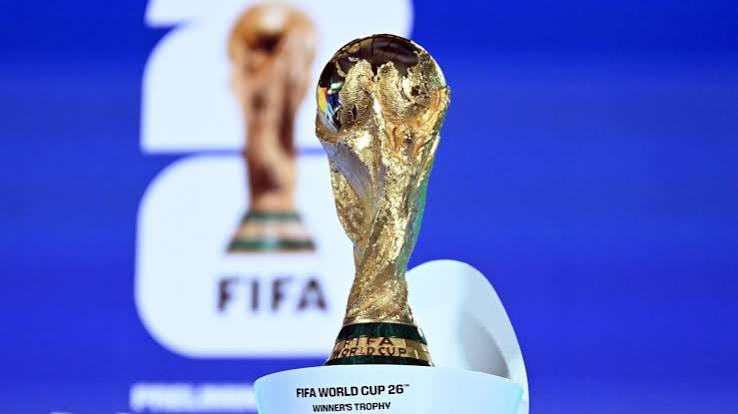
In international football, the question of what is the world cup is closely associated with a tournament that holds a special position. It is not simply a competition bringing together the strongest national teams in the world, but also a stage where sporting values, national identity, elite tactics, and global media appeal converge. In this article, let’s take a closer look at the status and significance of this exciting football event!
what is the world cup and Why Does It Hold a Special Position?
To understand what is the world cup, we must first look at the tournament as a competition for national teams. Unlike the Champions League or domestic leagues, which focus on club-level competition, the World Cup brings together representatives from different regions within the FIFA system. Players must temporarily leave their club environments to represent their national teams, creating a completely different competitive atmosphere in terms of tactics and psychology.
The tournament’s status comes from its strong sense of national representation. A player may win numerous club-level titles, but lifting the World Cup remains a special milestone in their career. This is due to the tournament’s cycle, the scale of competition, and the symbolic significance of representing one’s country. Opportunities to participate do not come around frequently, meaning each generation of players must make the most of a very limited window.
According to FIFA, the World Cup is a major stage for showcasing football talent worldwide. Its audience size, media coverage, and level of interest among fans make the tournament far more than an ordinary sporting competition.
Outstanding Characteristics of the Tournament’s Scale
One important aspect when analyzing what is the world cup is the tournament’s expanding scale. From the familiar 32-team format, the 2026 World Cup will move to a 48-team structure, divided into 12 groups of four teams. The top two teams in each group, along with the eight best third-placed teams, will advance to the round of 32.
This change creates a longer competition format. The 2026 champions will have to play eight matches instead of the seven played by the champions in Qatar in 2022. As a result, squad depth, physical recovery, and player management will become even more important factors.
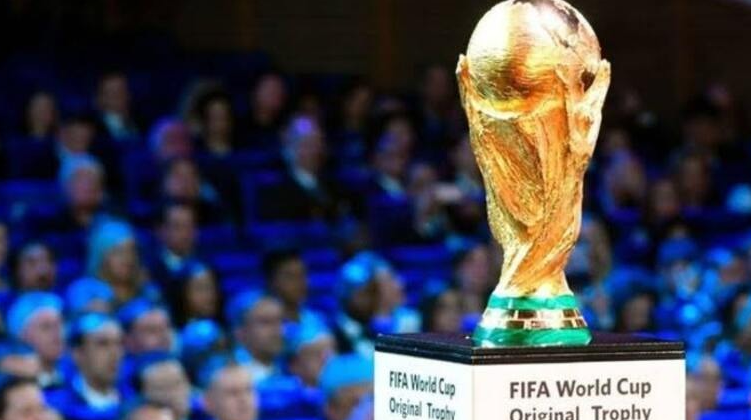
The expanded format also gives more national teams the opportunity to appear on football’s biggest stage. This is a notable development for the growth of the sport, as qualifying for the World Cup can encourage investment in youth development, facilities, and national competition systems. While following the tournament, fans can use Xoilac TV Truc Tiep Bong Da to access matches and check live score updates to keep track of scores and basic match developments.
Sporting Prestige Beyond a Single Tournament
If we view the World Cup only as a competition to determine the strongest national team, we overlook much of its value. The significance of what is the world cup is also reflected in its ability to create sporting icons whose influence lasts for generations. A goal, a final, or an individual performance can become a memory that people continue to talk about for decades.
The World Cup is also where different footballing philosophies meet. Europe often stands out for its tactical foundations and professional development systems, South America is renowned for its technical ability and creativity, while other regions are steadily closing the gap through investment and advances in sports science.
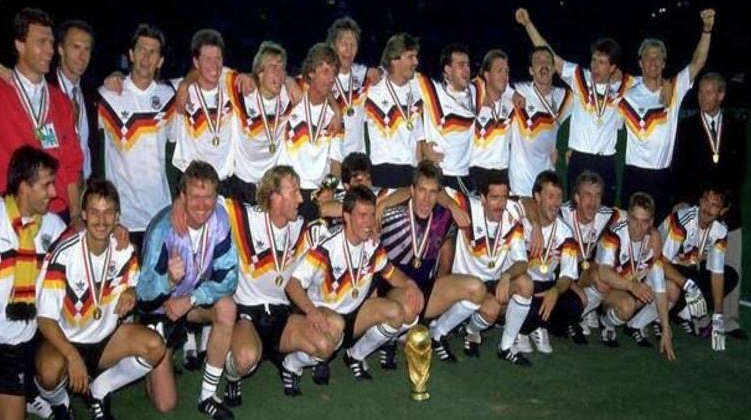
This diversity makes the competition a comprehensive test. A team aiming to progress deep into the tournament needs more than a collection of outstanding stars. It must also have a stable tactical structure, the ability to adapt to different opponents, and the mental strength to perform in knockout matches.
Xoilac TV can become a familiar destination for fans watching live football, while live score helps viewers quickly check results even when they cannot watch an entire match.
Cultural and Commercial Influence
Another aspect that helps explain what is the world cup is its influence beyond the pitch. The tournament connects countries through football while generating large-scale activity in tourism, media, advertising, and commerce.
The 2026 World Cup is particularly noteworthy because it will be hosted by three North American countries, with 16 host cities. FIFA has confirmed that this will be the first edition jointly hosted by three countries and the first to feature 48 teams.
This scale demonstrates how the World Cup is increasingly being developed as a global sporting event. Stadiums, broadcasting rights, digital platforms, social media, and related activities all form a vast ecosystem surrounding the tournament. Today, viewers also have more ways to access matches than before, as Xoilac TV Truc Tiep Bong Da meets the demand for online football coverage and provides a range of useful information.
The Value of the World Cup for National Football Systems
The significance of what is the world cup can also be assessed through its long-term impact on football development. Qualifying for the tournament often encourages countries to invest more heavily in youth development, player selection systems, and infrastructure. A strong performance can also enhance a national team’s standing on the international stage.
For leading national teams, the World Cup is an important benchmark for evaluating a generation of players. For emerging teams, the tournament offers an opportunity to prove that the gap between them and the elite can be narrowed.